Jet from Chezney on Vimeo.
Camera: Shot Types
Shot types is the variety and different ways that the camera is positioned in, as well as the framing of the subject on screen. Shot types can vary from extreme close ups where the camera focuses completely on one specific body part, to an establishing shot which reveals the whole location without a character present.
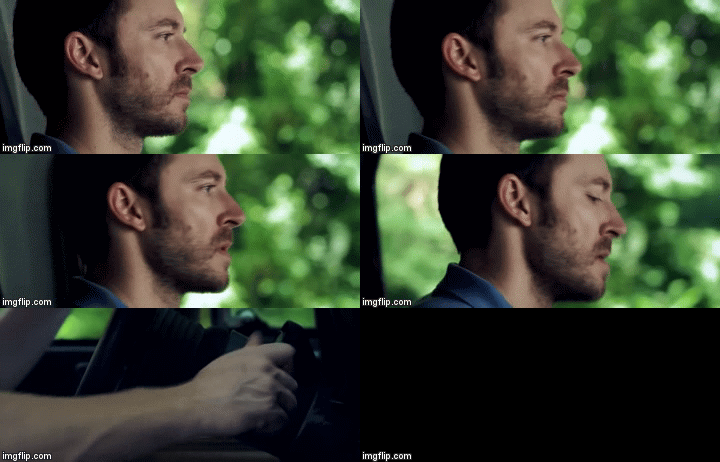 We can see the varied shot types being used at 2:34, here we see a close up of the characters hand turning the key in the ignition to follow the van that has stolen the girl. We further see another shot type being used at 3:05, in this scene we see a mid shot of the main character standing behind some trees, as he tries to look at the people getting out of the van. Moreover, this midst has allowed the audience to keep the focus on the main character i the foreground of the shot, whilst also revealing information in the background too.
Varying shot types allows for information to be revealed, in a more engaging way for the audience. By using a series of close-ups, mid-shots etc, allows for the scenes to flow together more creatively whilst also showing the continuity of the scene to the audience so that they dont have to think. Whilst many scenes could have been produced in a single long shot or mid shot, it would bore the audience, instead close-ups allow the audience to feel emotional and allow them to escape in the atmosphere of the films.
I have used varying shot types in my own work, more specifically in my music video. Through the narrative sections of our music video, we constantly cut between mid shots, close-ups to engage the audience through the story. We wanted to really portray a certain style and an overwhelming feeling of sadness for the character which could be achieved by the varying shot types that we used.
Lighting: Natural
Natural lighting, when the action uses natural sources for light such as the sun, to light the shot. Natural lighting can only be the sun or the moonlight to create light for the shot no man made lighting or artificial light can be used for the shot.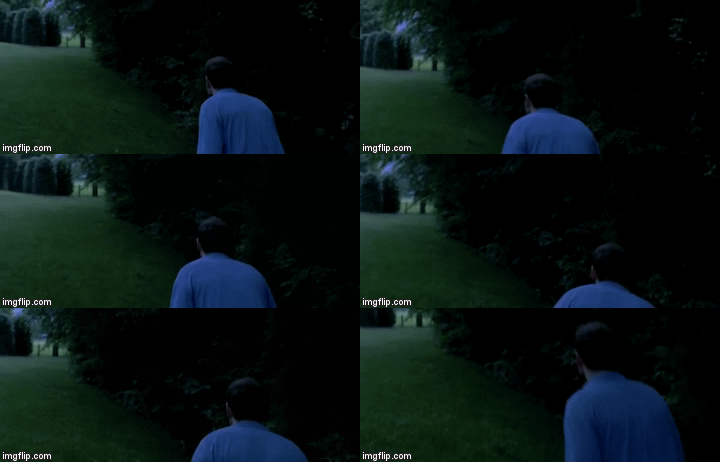
The use of natural lighting allows for the continuity of the scenes to flow more freely, it further extends the audiences ability to escape into the film rather then question things that they shouldn't need to. The natural lighting further allows for the filmmaker to reveal certain pieces of information and create meaning surrounding characters, for example by leaving the main character int he darker foreground it subconsciously makes the audience believe that they may become the dark character or do something which is very 'dark'.
I have used natural lighting during my ultra short film, during the crosscutting scene, as the dealer is walking to the park, the camera tracks from behind, using only natural light for the shot. As the scene was during midday, we could use the natural light keeping with continuity as we could later show the progression of the day as it got darker.
Sound: Tempo
Tempo is the speed in which the music or sound effect is playing at. Typically during horror's or thriller the tempo will start slow and increase to a high tempo to create intensity for the scene.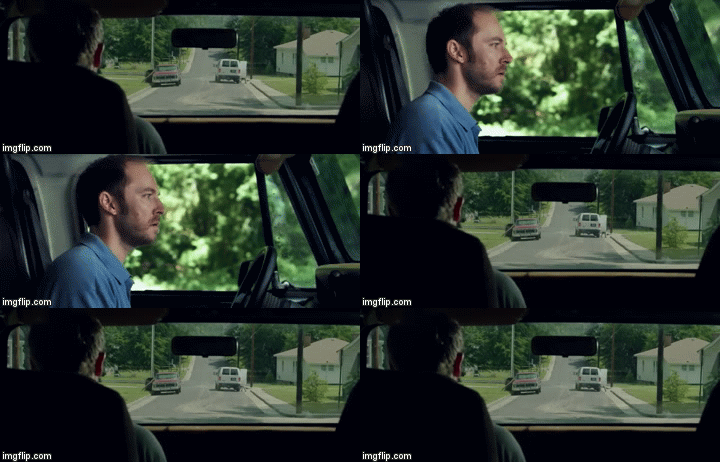 Typically thrillers will start off with a slow tempo and increase as the film goes on, to create an overwhelming intensity and atmosphere for the audience. However in this short film we see the at 2:03 the music begins, which is very slow but then at 2:45 is the point at which the tempo is at its highest. This perhaps differs from conventional the musics tempo does not increase as the film moves along but rather, reaches its peak early on whilst trying to maintain the level of atmosphere that it has already created through to the ending of the film.
For the filmmaker tempo is used to create atmosphere and heighten emotion of the scene. Tempo can kept in keeping with the speed of the transitions, as the filmmaker increases, the speed of cuts in the scene the tempo of the music can rise and thus making the audience feel overwhelmed. From an audience perspective, the tempo plays a big part in what we feel, it not only engages us but manipulates our response to the action on screen. Of course in this instance the music is used more differently, whilst it does speed up in some places there is not a gradual increase, but rather the filmmaker has fluctuated the tempo. This again creates a certain tension for the audience, as whilst it does not build us up to a big crescendo it does give a very eery tone for the audience throughout the whole film.
I have used tempo during my video on inspiration, in which the music started off very light and slow, the music then continued to build creating a more tense atmosphere for the audience. The music was at its fastest tempo as it was the most crucial part of the video, to which afterwards the music again slowed down and tailed off. This allowed me to make my audience feel so engaged, and focused on what was being said that afterwards there was almost a big release of emotion that the audience felt.
Editing: Color Grading
Colour grading is when the shots colours are changed purposefully to either correct what the camera didnt pick up or to create certain meanings through the different colours. Colour grading is used for aesthetics and to create meaning, eg, blue gives a cold sad meaning.
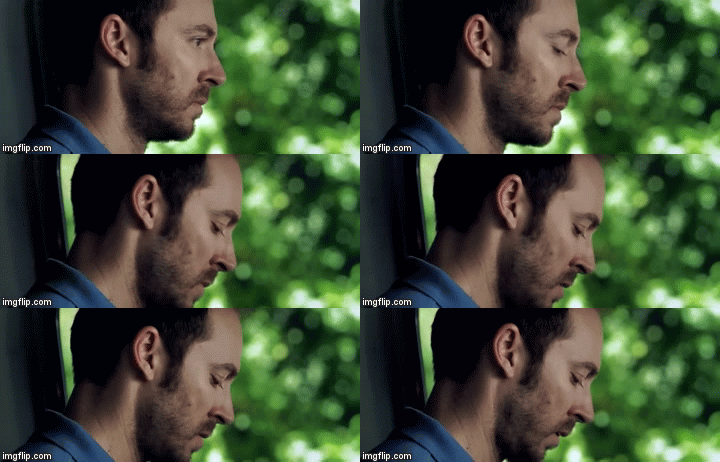 At 0:23 we see the use of colour grading being used, we see a close up, side on, of the main characters face in a deep thought, almost looking dejected. In terms of colour though we can see in the background which is heavily blurred that the trees are very vibrant, bright and almost have an enhanced feel to the green colour. In the foreground we see the mans face, naturally the colour grading is more of a natural look, we dont see a certain colour that dominates because we are just being introduced to the character. Equally just by looking at the top of his shirt we can see that the bull is very full in colour, it doesnt look flat in any way.
Colour grading creates a more full picture, whilst in many cases colour grading can highlight a certain colour which relates to an emotion in this film it is used more for realism. The filmmaker has allowed the colour grading to make many of the shots look more aesthetically pleasing, again relating back to the engagement of the audience. Whilst it is something that may consciously go unnoticed for the audience, if the film was not colour graded the audience perhaps would question the quality of the film.
I have used colour grading in my documentary on happiness. During the opening first shot of the documentary which was a piece to camera, when we first looked at the shot the colours seemed quite flat, however when we colour graded it we focused mainly on the mid tones of the shot, this made the shot look more vibrant and aesthetically pleasing to watch. The shot was made to look brighter, elevating the green that was in the shot as well as making myself look warmer.
Scripting: Expression & Body Language
Expression is a characters ability to portray emotion within the scene in a variety of different ways. Expression can stem from facial expressions, body and language or dialogue. Body language, is a type of expression, it is where the character will move their body in a certain way to portray emotion to the audience without using any dialogue or speech.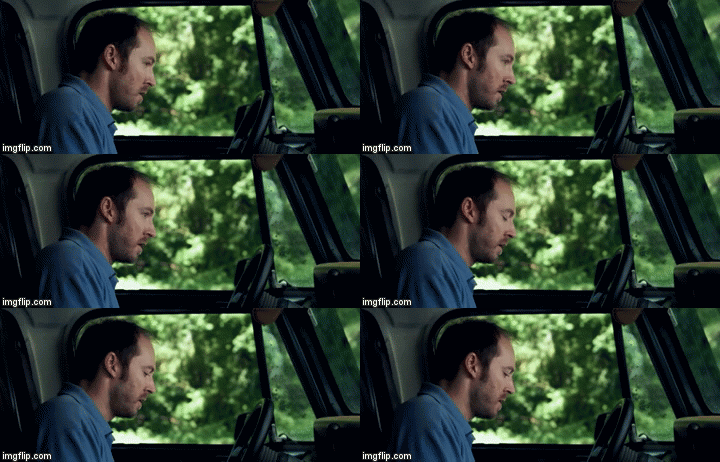 We see at 1:33 in a mid shot, side on, the main character couldn't pull the trigger to kill himself, as he has just lowered the gun he sits, hunched over and breathing very heavily. Whilst during this scene there is no dialogue or music, at this point his body language is the biggest sign of emotion for the audience.
As a filmmaker using body language perhaps creates more of a connection with the audience, it makes the audience feel very far apart from the character, which ultimately creates an even greater connection for the audience. By creating that distance the audience are manipulated into feeling an overwhelming sense of sympathy for the character thus positioning the audience on his side early on without actually knowing anything about him.
I used certain body language during a short film on Cyber bullying, this was a silent film, with just music playing. This meant that when acting i needed to produce more dramatic body language to really make a connection with the audience as well as emphasising the emotion i felt. The body language in a particular scene where i was crying, really allowed the audience to see a very raw form of emotion.
Building a Story: Realist
A realist story is a film that stays in the real world, it uses real world physics and is governed by real laws. This story type is realateable for the audience as it keeps the story in reality, and doesn't veer off into actions that are impossible.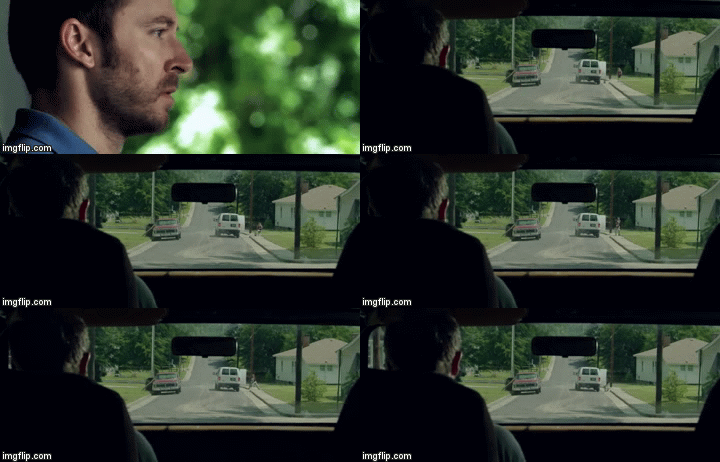 The film throughout uses a realist story, it is set in the real world and uses the physics and laws of the real world. This could be seen anywhere in the film, but at 1:57/2:00 we see the same long shot from the backseat of the car looking out at the road. As we see the white van pull up to snatch the girl, we can simply notice the break lights of the van as it stops. This in itself is an example of a realist story because the film is explicitly showing that the van has had to break and stop like any other car would have to do in order to kidnap the girl.
A realist story is used to give the sense of realism to the audience, it makes the audience feel that it is a story that could and can happen in real life. This further builds the tension for the audience, because now the film can be seen in a way that it is very plausible for the story to happen and perhaps if something is more achievable then the audience feel closer to it rather then having the excuse that it is make believe. Much like this film, which makes the audience understand and manipulate them into realising that this could have really happened, which is more scarier and more frightening for them rather then an anti-realist story in which they can easily deal with.
My ultra short film used a realist narrative, because we wanted the genre to be British Realism, which meant we need to have a narrative that really highlighted the gritty urban British life in order to stick to the genre. The realist story can really be seen when i was simply walking down the road, mainly because we wanted to include a setting and objects that the audience could really relate to, in this instance it was the red double-decker 86 bus.
Building a Scene: Climatic Ending
A climatic ending is where we see the content on its knife edge, it is where the audience consume a vast amount of information as there has been a whole build up to this final point. Climatic endings typically happen in a very fast paced fashion as there usually may be a fight scene or action scene of some sort.
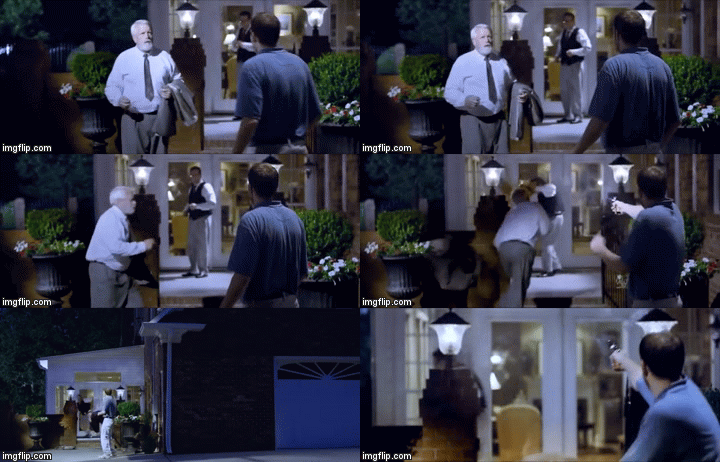
A climatic ending can be seen at 5:47, here we see the main character trying to go round the back of the house, to which he runs into two other characters leaving the house. In a long shot we see the main character shoot and kill the two other characters, and further run in to the house to find the girl. The film then ends in a close up of the mans face as he has killed two people, but the shot turns into a long shot of the girl sitting on a stool in the kitchen which ends the film.
For a filmmaker a climatic ending allows for the film to have a definitive end point, it allows the film to have a resolution at the end. A climatic ending also allows the audience to feel satisfied, often when films are left on a cliffhanger there perhaps is a distaste for the audience, however with a climatic ending there will always be an outcome which the audience can appreciate. However with this film Jet, the climatic ending is very sudden and even after it happens there is still one last scene that creates a cliffhanger for the audience. So whilst in this particular 'episode' there is an end point to the film, that final shot allows the audience to allude to something more that could potentially happen.
A climatic ending is something i haven't used yet. The films i have produced have mostly focused on an emotion or a situation which meant i couldn't build the film to a climatic ending. However i do aim to produce a film in the future based on society which i want to start from an idea and build to a big climatic ending which whilst may not resolve the issue of the film but certainly carries an end point which i hope gets the message of the film firmly across to my audience.
For a filmmaker a climatic ending allows for the film to have a definitive end point, it allows the film to have a resolution at the end. A climatic ending also allows the audience to feel satisfied, often when films are left on a cliffhanger there perhaps is a distaste for the audience, however with a climatic ending there will always be an outcome which the audience can appreciate. However with this film Jet, the climatic ending is very sudden and even after it happens there is still one last scene that creates a cliffhanger for the audience. So whilst in this particular 'episode' there is an end point to the film, that final shot allows the audience to allude to something more that could potentially happen.
A climatic ending is something i haven't used yet. The films i have produced have mostly focused on an emotion or a situation which meant i couldn't build the film to a climatic ending. However i do aim to produce a film in the future based on society which i want to start from an idea and build to a big climatic ending which whilst may not resolve the issue of the film but certainly carries an end point which i hope gets the message of the film firmly across to my audience.

No comments:
Post a Comment